A classic problem faced by many companies is that the content communicated on their website differs from that on LinkedIn or Instagram. Campaigns often follow different content logic depending on who is responsible for them. What is missing is a common approach. Individual posts may be well done, but taken together, they often fail to present a consistent brand image.
This is precisely what weakens the brand. Without a clear, recognizable communication pattern, there is a lack of orientation and thus a lack of foundation for trust. Trust is not only created through creative marketing campaigns, but also through consistent communication across different channels. This is exactly where we were able to pick up the thread at the EUKO Conference 2025 in London.
Topics at EUKO 2025
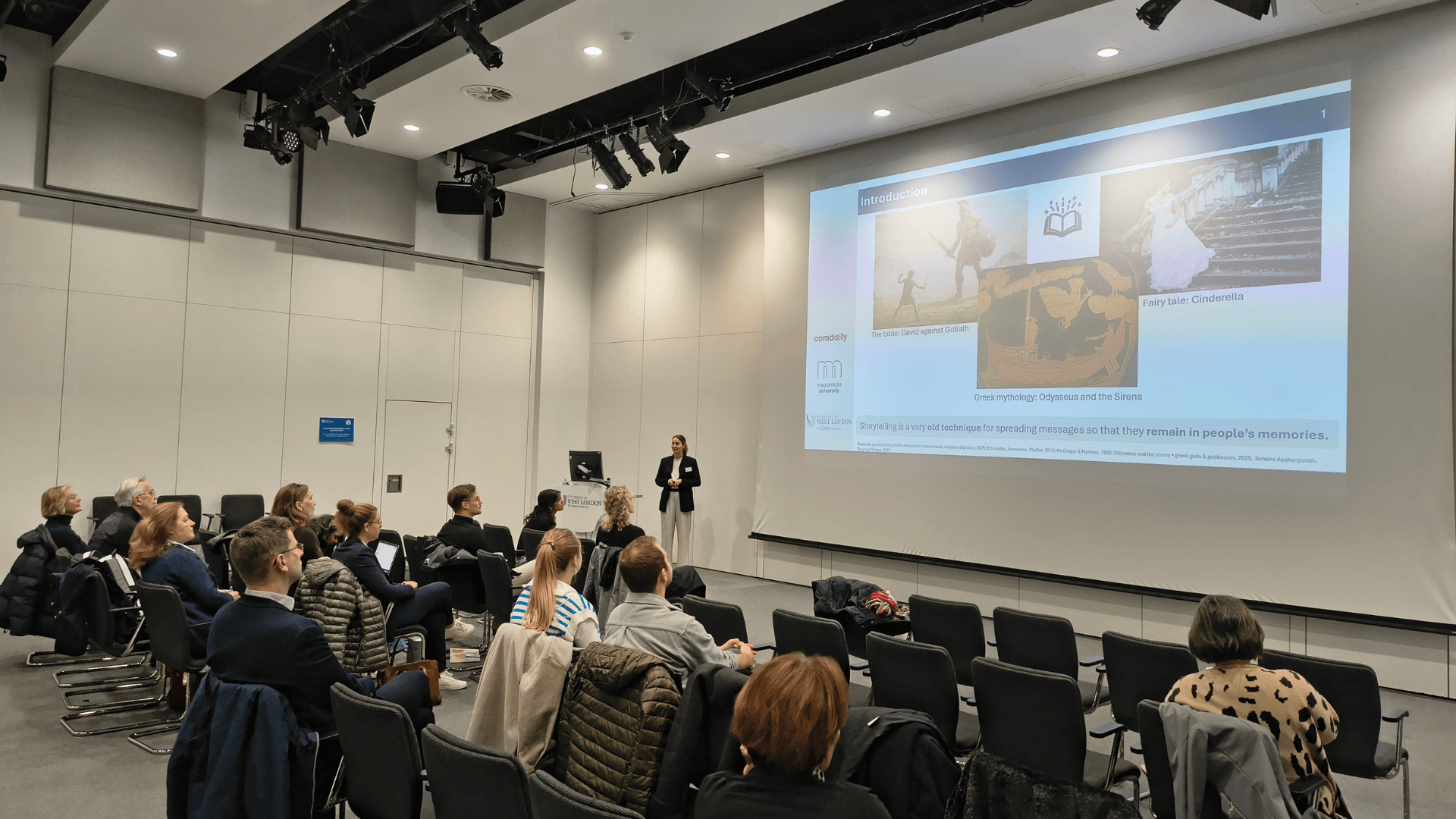
This year marked the 25th anniversary of the EUKO conference. It was held at the University of West London and focused on the topic of storytelling. Stories are easier to remember and contribute to greater brand recognition. But that alone is not enough, because even the best storytelling won't work if the message is not conveyed consistently across all channels. The key is to make this consistency measurable, which was the topic of our presentation.
The blind spot for companies
Many brands find it difficult to communicate consistently due to the increasing frequency of communication and communication channels. We took a closer look at this in a comparative case study using the example of two well-known brands: Coca-Cola and Patagonia. The study identified the core values of both brands and examined how strongly these are represented in different communication channels.
Meaning for the practice
If you want to build trust, you need clarity and consistency. Not identical in content, but recognizable. Consistency is the framework in which good stories unfold their effect. It is precisely this consistency that can be controlled when companies begin to take it seriously and analyze it systematically.
comdaily conclusion: The EUKO conference was a place where many exciting perspectives came together. Representatives from research and practice engaged in intensive discussions on key aspects of strategic communication and arrived at insightful conclusions. It became clear to me that many companies know that storytelling is important, but they don't know how to control or evaluate it in a targeted manner. Another surprising moment was the exhibition by a photographer at the venue. She showed pictures that tell little stories – completely without words. This is also storytelling and reminds us that recognizability is not only created in text, but also in images.